Reviews Ipamorelin
The fat-gain finding in Ipamorelin reviews
The leaner-body reputation runs into a mouse experiment that increased fat. Those mice sent me to a very different ferret study.
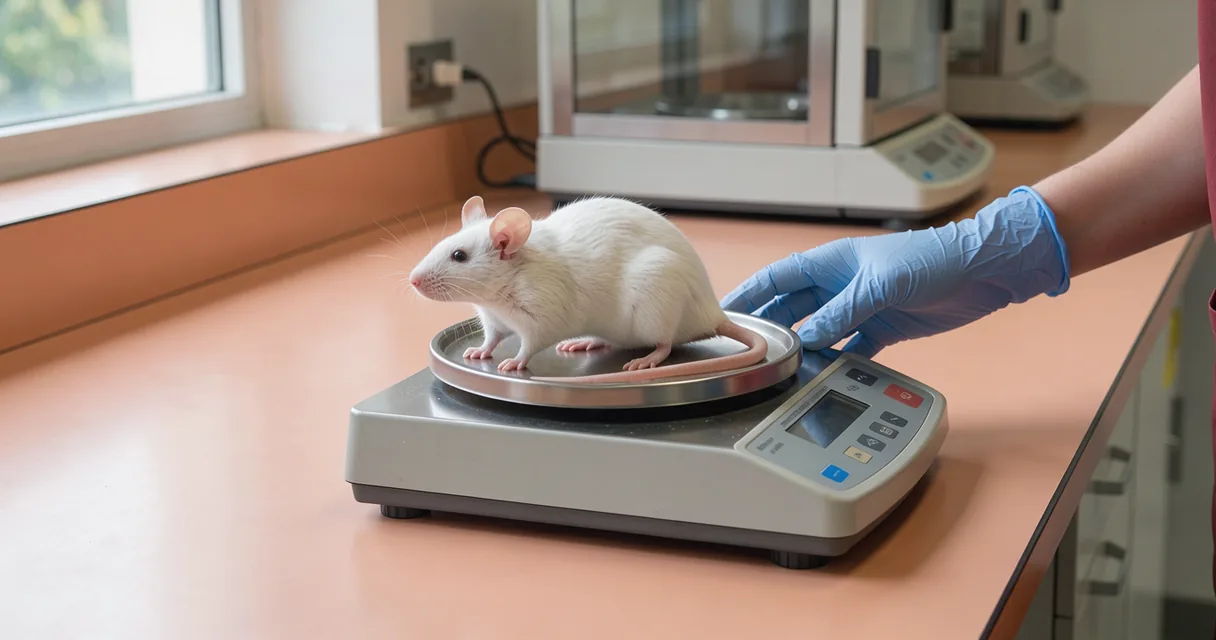
The mice gained fat
The awkward place to begin an Ipamorelin review is a mouse experiment that increased fat-pad weights and leptin. Researchers studied mice with growth-hormone deficiency alongside mice with an intact growth-hormone system. After two weeks of ipamorelin, adiposity increased in both. Adiposity simply means body fat; the striking feature here is that some of the effect persisted without normal growth hormone.
I had let growth hormone explain too much. A selective growth-hormone signal sounded as though it might explain the whole compound. Those mice complicate that assumption: ipamorelin can affect fat through routes beyond growth hormone.
That result gives the occasionally reported leaner appearance an awkward neighbour. Those community accounts are anecdotes, not clinical evidence, and diet and training complicate them further. The mice establish an animal finding. Human fat loss still needs a human experiment.
When preserving weight was the aim
In a 2024 experiment involving ferrets given cisplatin, the problem was chemotherapy-associated weight loss. Ipamorelin inhibited that loss by about 24% on the last day of the delayed phase. It had no anti-emetic effect: the animals continued to vomit.
I rate that ferret finding as cautiously encouraging. Preserving weight during an illness and seeking a leaner appearance are different aims, so the same word, benefit, can conceal opposing wishes. The ferret result concerns an anti-wasting model; it supplies no human fat-loss outcome. It also leaves an unusually specific puzzle: weight was better preserved while vomiting persisted.
The appetite and weight review puts those two animal experiments together. I want the weight-loss reputation tested against those conflicting aims.
Hormonal selectivity
There is an impressive result underneath the reputation. The founding experiments in rat cells, rats and swine demonstrated potent growth-hormone release with much less stimulation of ACTH and cortisol than older growth-hormone-releasing peptides. Ipamorelin activates the ghrelin receptor, a receptor also involved in appetite and gut movement.
I admire this particular pharmacological achievement. The leap from that response to a favourable review of sleep, recovery or body composition is much harder to defend. In healthy male volunteers given intravenous ipamorelin, researchers measured a single growth-hormone pulse and a terminal half-life of approximately two hours. The experiment measured hormone behaviour and drug handling. The mechanism page follows that particular achievement.
The human verdict remains limited
The published trial in adults having bowel resection tested eating again after surgery. Its main endpoint was missed. That clinical disappointment deserves its own space in the research record, alongside the animal work, rather than being stretched into a verdict on every possible use.
Ipamorelin has no approved indication. Broad claims of a leaner body strike me as unearned; the biological reasons for these different results deserve the attention. The useful review has to name the outcome: more growth hormone, more fat in mice, less weight lost by ferrets, or a meal tolerated by a person. Each carries a different verdict.